
Void
공(空)
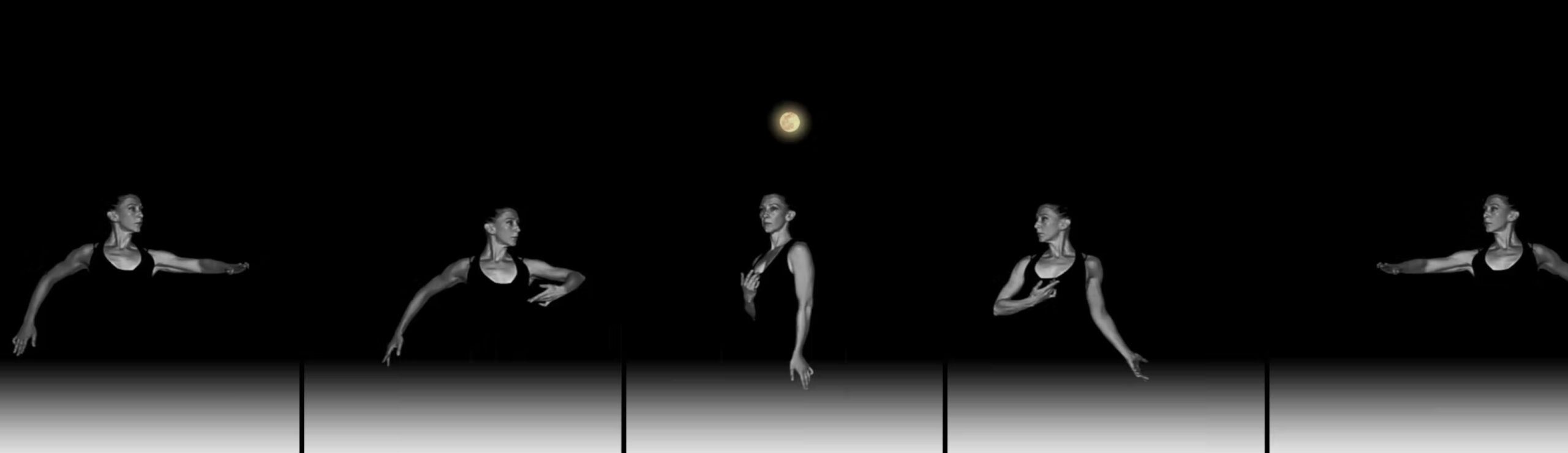
Dreams do not move in straight lines. They accelerate, lose direction, and collapse the order of time. Void [空] is a work that materializes this nonlinear structure through the physical velocity and overwhelming presence of a 'Media Wall' situated in the heart of the city.
Today, a massive media wall placed in a public space is not merely a flat surface for consuming spectacle. Just as the philosophical insight suggests that a medium truly incarnates into an image only when it encounters the body of the viewing public, these five screens become architectural 'windows' leading to another time and space as they collide with the bodies of countless others passing by on the street. The landscape passing outside a train window begins at the speed of everyday life, but as acceleration builds and the coordinates of reality dissolve, this window no longer remains a mere representation of the outside world.
When the speed reaches its peak and the moving image achieves a state of vacuum, the media wall transforms into a 'saturated phenomenon' that exceeds our cognition. While ordinary screens often remain mere idols that unilaterally absorb and exhaust our gaze, this screen, flooded with an overflow of light and speed, instead overwhelms the viewer's intentionality and offers itself in 'givenness'. It is not we who master the image within the screen; rather, an inversion of the gaze occurs, where the abyss of massive pixels gazes back at the public on the street.
The body of performer Blakeley Macgire, traversing this vast dream-space, is a lived body (Leib) that embodies the threshold between the real and the surreal. His movement, holding both a pulling toward and a pushing away simultaneously, induces a profound empathy (Einfühlung) in the viewers outside the screen. It invites the anonymous public passing by on the street into a field of transcendental sensation beyond the dimension of the isolated self.
꿈은 선형으로 흐르지 않는다. 가속도가 붙고, 방향을 잃고, 시간의 순서를 무너뜨린다. 《Void》는 그 비선형의 구조를 도심 한복판에 위치한 '미디어 월(Media Wall)'의 물리적 속도와 압도성으로 구현한 작업이다.
오늘날 공공의 장소에 놓인 거대한 미디어 월은 단순히 스펙터클을 소비하게 만드는 평면이 아니다. 매체(Medium)가 그것을 마주하는 대중의 신체(Body)와 조우할 때 비로소 진정한 이미지로 성육신한다는 철학적 통찰처럼, 이 다섯 개의 스크린은 거리를 오가는 무수한 타자들의 몸과 부딪히며 다른 시공간으로 통하는 건축적 '창(Window)'이 된다. 기차 창문 밖으로 스쳐가는 풍경은 일상의 속도로 시작되지만, 가속이 더해지고 현실의 좌표가 용해될 때 이 창은 더 이상 바깥 세계의 재현에 머물지 않는다.
속도가 절정에 이르러 영상이 진공 상태에 다다를 때, 미디어 월은 우리의 인식을 초과하는 '포화된 현상(Saturated Phenomenon)'으로 전환된다.
일상의 스크린이 우리의 시선을 일방적으로 흡수하고 소진시키는 우상(Idol)에 그친다면, 빛과 속도의 범람으로 가득 찬 이 화면은 오히려 관람자의 지향성을 압도하며 스스로를 내어준다(Givenness). 우리가 스크린 속 이미지를 장악하는 것이 아니라, 거대한 화소의 심연이 오히려 거리의 대중을 응시하는 시선의 역전이 일어나는 것이다.
이 거대한 꿈의 공간을 가로지르는 퍼포머 블레이클리 맥과이어(Blakeley Macgire)의 몸은 현실과 초현실의 문턱을 살아내는 육화된 주체(Leib)다. 끌어당김과 밀어냄을 동시에 품은 그의 움직임은 화면 밖의 관람자에게
깊은 감정이입(Einfühlung)을 유발하며, 고립된 자아의 차원을 넘어 거리를 지나는 익명의 대중을 초월적 감각의 장으로 초대한다.
그러므로 이 작업에서 공(空, Void)은 단순히 불교적 무(無)나 물리학적 진공만을 뜻하지 않는다. 신학적인 관점에서 그것은 철저히 스스로를 비워내는 '케노시스(Kenosis)'의 차원이며, 잊혀진 틈새의 시간과 절대적인 타자가 개입할 수 있는 무한한 수용의 공간이다. 일상의 궤도를 돌며 바쁘게 지나치던 군중은 이 압도적인 미디어 월 앞에서 발걸음을 멈추고, 파편화된 도시의 무의식을 품어내는 일종의 거대한 '제단(Altar)'과 마주한다. 우리는 가장 세속적인 거리 위에서, 그 진공이 열어젖힌 낯설고도 압도적인 숭고함 안으로 걸어 들어가게 된다.