
Empty Tomb
빈 무덤
영상 보기 / Videos
5min · 3-channel video with lighting sync
5분 · 3채널 영상과 조명 싱크
This work originated from a prayer experience during a 30-day retreat. The day before, I had a strong experience of Jesus's presence. The following day, I spent an hour in the Spiritual Exercises venerating each fold of his garments. The prayer was long. I already knew that the response that deeply stirs my soul usually comes only at the very end of prayer.
It was while gazing at him and venerating him for 59 minutes. In one moment, his body disappeared. The clothes remained as they were, but the body that should have been inside was gone. It was so sudden that it remains the most intense moment of those Spiritual Exercises.
At that moment I realized I had to let go even of the image of Jesus I had encountered the day before. No matter how intense and beautiful the experience, I must not hold onto it and make it an image of Jesus I possess. It came to me like the words spoken to Mary Magdalene: "Do not hold on to me." Jesus was not an image I could hold. He was always one who goes ahead of the image I try to remember and possess.
From this experience, Noli Me Tangere began. And the first image — clothes remaining after the body disappeared — became the starting point for the Empty Tomb work.
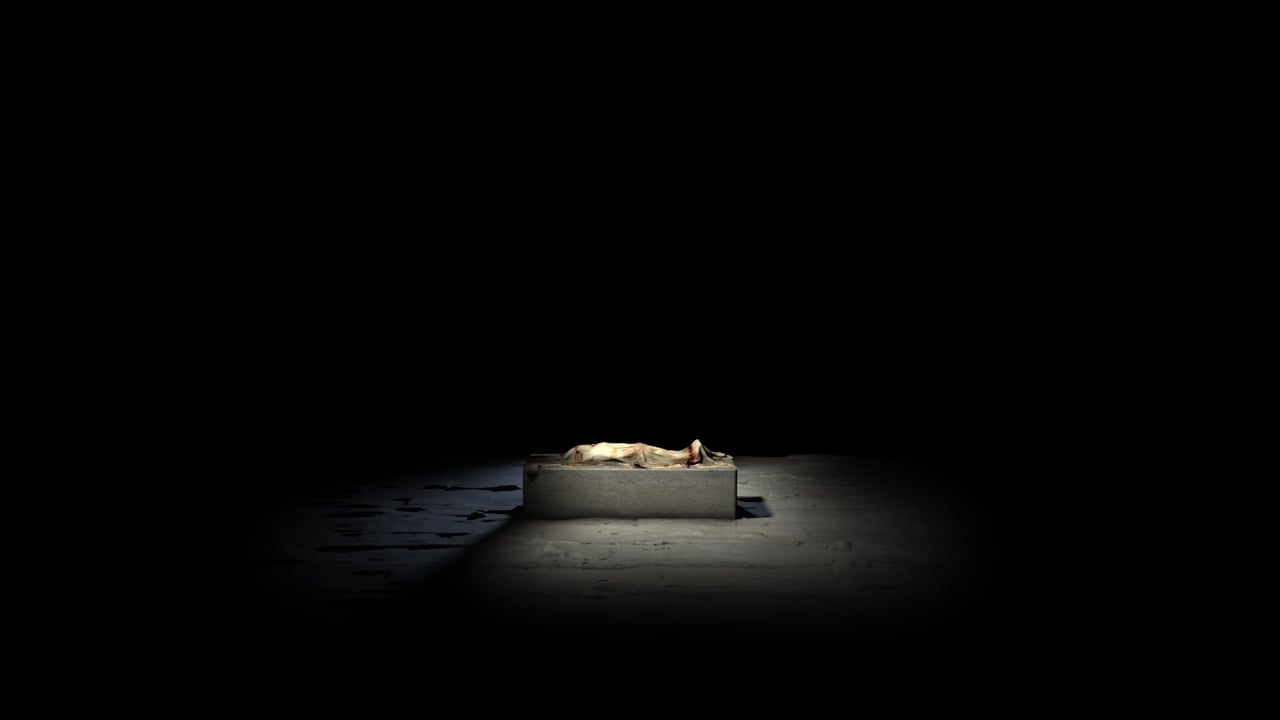
At the center of the screen, a cloth-wrapped body lies upon stone. Light gradually enters, and with the sound of a small bell, the cloth begins to rise. At that very moment, it is revealed that the body beneath the cloth is absent. The cloth ascends and floats and billows for about one minute. It does not preserve the form of a body. It continues to fold and unfold, refusing to be captured in a single form.
In this work, the empty tomb is not simply a place where the body has disappeared. It is the place where I must release the image of Jesus I thought I knew. Yet this emptiness is not complete absence. The rising cloth does not hold the viewer's gaze at the empty place, but moves it in the direction where the unseen body has gone ahead.
In the Adoration Chapel where the work is installed, above the screen the consecrated Eucharist is displayed. The Eucharist is neither an image in the video nor a symbol created by the work. In the Catholic faith, it is the place of the real presence of Christ's body. Within the screen the body disappears beneath the cloth, but in the actual liturgical space above, Christ's body is sacramentally present. Absence and presence do not cancel each other out, nor are they visible in the same way.
This work does not attempt to recreate and show the image of Jesus. Rather, it asks how one can receive his presence even after letting go of the form one had been holding onto. The cloth does not stand in for Christ's body. It is simply lifted and transformed in shape, creating a space where the gaze and imagination may open toward a presence that cannot be possessed.
이 작업은 30일 피정 중에 겪은 한 기도 체험에서 시작되었다. 전날 나는 예수의 현존을 강하게 경험했다. 다음 날에는 그분의 옷자락 하나하나를 흠숭하는 한 시간의 영신수련을 했다. 기도는 길었다. 나는 내 영혼을 깊이 흔드는 응답이 대개 기도의 마지막에 이르러서야 온다는 것을 이미 알고 있었다.
그렇게 59분 동안 그분을 바라보고 경배하고 있을 때였다. 한순간에 그분의 몸이 사라졌다. 옷은 그대로 남아 있었지만, 그 안에 있어야 할 몸은 없었다. 너무 갑작스러운 일이어서, 당시 내가 겪었던 영신수련의 체험 가운데 가장 강렬한 순간으로 남았다.
그때 나는 전날 만났던 예수의 모습마저 보내드려야 한다는 것을 깨달았다. 아무리 강렬하고 아름다운 체험이라 해도, 그것을 붙들어 내가 소유한 예수의 형상으로 만들어서는 안 되었다. 그것은 마리아 막달레나에게 하신 "나를 붙들지 마라"라는 말씀처럼 다가왔다. 예수는 내가 붙잡아 둘 수 있는 이미지가 아니었다. 그분은 언제나 내가 기억하고 소유하려는 모습보다 앞서 가시는 분이었다.
이 체험에서 〈나를 만지지 마라〉가 시작되었다. 그리고 몸이 사라진 뒤 옷만 남아 있는 첫 이미지는 이후 빈 무덤 작업의 출발점이 되었다.
화면 한가운데에는 돌 위에 천으로 싸인 몸이 놓여 있다. 조금씩 빛이 들어오다가 작은 종소리와 함께 천이 위로 떠오르기 시작한다. 바로 그 순간, 천 아래에 있어야 할 몸이 없다는 사실이 드러난다. 천은 약 1분 동안 상승하고 부유하며 휘날린다. 그것은 몸의 형태를 보존하지 않는다. 계속 접히고 펼쳐지면서 하나의 모습으로 붙잡히기를 거부한다.
이 작업에서 빈 무덤은 단순히 몸이 없어진 장소가 아니다. 그것은 내가 알고 있다고 생각했던 예수의 모습을 놓아드려야 하는 자리다. 그러나 그 비어 있음은 완전한 부재도 아니다. 떠오르는 천은 관객의 시선을 빈자리에 붙들어 두지 않고, 보이지 않는 몸이 앞서 간 방향으로 움직이게 한다.
작품이 설치된 성체조배 경당에서 화면 위에는 축성된 성체가 현시되어 있다. 성체는 영상 속 이미지도, 작품이 만들어낸 상징도 아니다. 가톨릭 신앙에서 그것은 그리스도의 몸이 실재적으로 현존하는 자리다. 화면 속 천 아래에서 몸은 사라지지만, 그 위의 실제 전례 공간에는 그리스도의 몸이 성사적으로 현존한다. 부재와 현존은 서로를 취소하지 않으며, 동일한 방식으로 보이지도 않는다.
이 작품은 예수의 모습을 다시 만들어 보여주려 하지 않는다. 오히려 내가 붙잡고 있던 형상을 놓아드린 뒤에도 그분의 현존을 어떻게 받아들일 수 있는지를 묻는다. 천은 그리스도의 몸을 대신하지 않는다. 다만 들어 올려지고 형태를 바꾸면서, 소유할 수 없는 현존을 향해 시선과 상상이 열릴 자리를 만든다.